
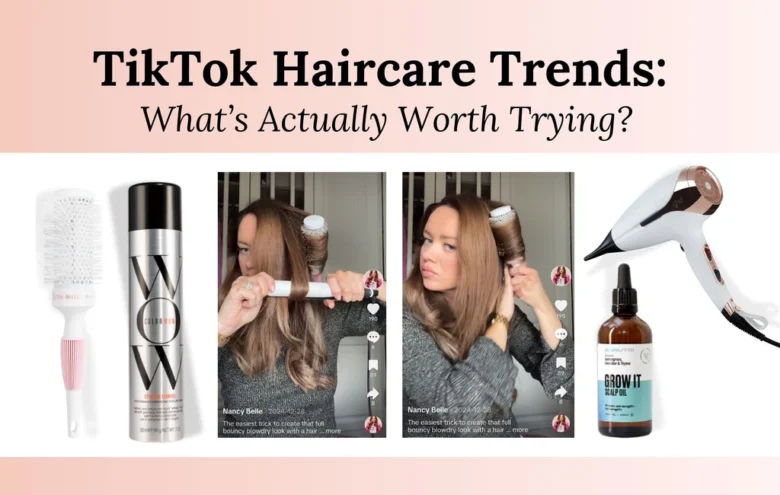
Scroll through TikTok for just a few minutes and you’ll see it—someone’s hair growing overnight, a miracle oil routine, or a “secret method” that supposedly fixes all hair problems instantly.
It looks convincing. It feels exciting. And before you know it, you’re thinking:
“Should I try this too?”
But here’s the uncomfortable truth most people discover later:
Not every viral hair trend is safe, and not every result is real.
Some trends are helpful. Some are harmless but overhyped. And some can quietly damage your hair over time.
Let’s break it down honestly so you know what’s worth trying—and what’s better left on your feed.
Why TikTok Hair Trends Spread So Fast
Hair content performs extremely well on social media because:
- Results are visual
- Transformations look dramatic
- Videos are short and emotional
- People want quick solutions
When someone shows “before vs after” hair growth or shine, it triggers hope instantly.
But what you don’t see is:
- Lighting differences
- Filters
- Extensions or styling tricks
- Long-term effects (if any)
Virality doesn’t equal reliability.
The Biggest Problem With Viral Hair Advice
Most viral hair tips have one thing in common:
They are based on individual results, not universal science.
Hair is extremely personal. What works for one person can fail completely for another because of:
- Hair porosity
- Scalp condition
- Genetics
- Climate
- Product buildup history
So when a video says “this works for everyone,” that’s already a red flag.
Trend 1: Rice Water for Hair Growth
This is one of the most popular TikTok hair trends.
What it claims:
- Faster hair growth
- Stronger strands
- Shinier hair
What actually happens:
Rice water contains amino acids and starch that can temporarily smooth hair and add shine.
The truth:
- It may improve hair feel for some people
- It does NOT guarantee faster growth
- Overuse can cause protein overload, making hair stiff or dry
Reality check:
It’s a conditioning treatment, not a miracle growth solution.
Trend 2: Hair Oiling Overnight
Oiling hair overnight is heavily promoted as a “growth secret.”
What it helps with:
- Moisture retention
- Reducing friction
- Temporary softness
The hidden issue:
Leaving oil too long can:
- Attract dust and buildup
- Clog pores on the scalp (for some people)
- Make washing harder
Better approach:
Oil for a few hours before washing instead of overnight for everyone.
Trend 3: Inverting Hair for Growth (Head Down Method)
This trend claims that hanging your head upside down increases blood flow and boosts hair growth.
Reality:
- Blood flow does increase temporarily
- But there is no scientific proof it increases long-term hair growth
What it actually does:
- May make hair feel slightly fuller temporarily
- Mostly placebo effect
Bottom line:
It’s harmless for most people, but not a real growth solution.
Trend 4: Using Excessive Hair Products Layering
TikTok often shows routines with:
- 5–10 products in one wash day
- Multiple oils, creams, serums stacked together
Problem:
More products do not mean better results.
This can lead to:
- Product buildup
- Weighed-down hair
- Dull appearance
- Scalp imbalance
Simple truth:
Hair does not need a complicated routine—it needs a balanced one.
Trend 5: DIY Hair Masks from Kitchen Ingredients
Eggs, onion juice, mayonnaise, coffee—almost everything has been used on hair at some point.
Some benefits:
- Temporary softness
- Slight conditioning effect
Risks:
- Smell and hygiene issues
- Inconsistent results
- Possible irritation
- No controlled formulation
Important point:
Your kitchen is not a lab. Hair products are scientifically balanced for a reason.
Trend 6: “No Shampoo” or Extreme Washing Methods
Some trends promote avoiding shampoo completely.
What happens:
- Scalp oil builds up
- Dirt and product residue accumulate
- It can lead to itchiness or odor
Reality:
Scalp cleansing is essential. The method should match your hair type, not eliminate hygiene.
Why Some TikTok Trends Seem to Work
You might wonder:
“If it doesn’t work, why do people show results?”
Here are real reasons:
1. Temporary effects
Some treatments only improve appearance short-term.
2. Better overall routine
People often change multiple habits at once, not just one product.
3. Styling tricks
Blow drying, curling, and lighting can transform appearance instantly.
4. Natural hair cycles
Hair naturally grows and sheds—timing can make it look like a “trend worked.”
How to Identify Safe vs Risky Hair Trends
Before trying any viral tip, ask:
1. Does it make biological sense?
If it sounds too magical, it probably is.
2. Is there long-term evidence?
One video is not proof.
3. Does it match my hair type?
Curly, straight, oily, and dry hair react differently.
4. Is it extreme or overly complicated?
Simple routines are usually safer.
The Smart Way to Use TikTok Hair Advice
You don’t need to ignore all trends. Just filter them.
Safe approach:
- Try one new thing at a time
- Observe results for 2–3 weeks
- Stop if hair feels worse
- Keep your core routine stable
Unsafe approach:
- Changing everything at once
- Copying multiple influencers
- Expecting instant transformation
Common Mistakes People Make
1. Believing “before/after” without context
Lighting and styling matter a lot.
2. Overloading hair with experiments
Too many changes confuse your hair and scalp.
3. Ignoring basic care
Shampoo, conditioner, and scalp health still matter most.
4. Chasing growth instead of health
Healthy hair grows naturally over time.
What Actually Works for Healthy Hair
Forget trends for a moment. These basics matter more:
- Regular scalp cleansing
- Balanced moisture routine
- Gentle handling
- Heat protection when styling
- Consistency over time
These are not viral—but they actually work.
FAQ
1. Are TikTok hair growth hacks real?
Some improve hair appearance temporarily, but most do not significantly affect growth.
2. Is rice water good for all hair types?
Not always. It can cause protein overload in some hair types.
3. Should I avoid all viral hair trends?
No, but you should test them carefully and not rely on them fully.
4. Why does my hair look worse after trying trends?
Because of buildup, imbalance, or mismatch with your hair type.
5. What is the safest hair care approach?
A simple, consistent routine tailored to your hair type.
Conclusion
Viral TikTok hair trends are not all fake—but they are not all reliable either.
Some can help with softness or styling, but very few deliver real long-term transformation. The biggest mistake is treating social media like a hair care manual instead of a source of ideas.
Real hair health doesn’t come from shortcuts or viral hacks. It comes from understanding your hair, keeping your routine simple, and staying consistent over time.
Once you stop chasing trends and start listening to your hair, everything becomes easier—and much more predictable.